
Education Factories
By Peter LloydThe way schools are run these days, I'd be proud to display a bumper sticker that reads, "My child is a disciplinary problem." Not that it's true, but if it were, I'd be proud to announce it.
Here comes an over-simplification for the sake of illustration. Let's consider three kinds of kids in today's schools.
1. Those who get it. They understand why they're in school and they want to learn. Good for them and the parents who helped them reach that point.They have a future. They exhibit the creative trait that shone in Einstein and every other creative genius we applaud today. If they're lucky, they'll find a passion. Then clear the way, because they will come flying through.
2. Then there are those who don't get it but complacently cower under the rule of school and just go along. No problem with them either, except that they're complacent. But that's another Workout.
3. Let's consider the kids who don't get it and rebel, disrupt class, and refuse to go along just because they've been told to. These kids are as valuable as the first group and way ahead of the second.
Meanwhile, kids are still sitting behind desks, doing papers, raising their hands to ask permission, and being sent to the principal for talking out of turn. What a waste of creative energy!
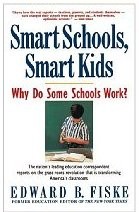 In their book, Smart Schools, Smart Kids, Authors Edward B. Fiske and Sally Reed indict our schools for operating like factories. And not even our more enlightened factories—the kind that produced Henry Ford's original Model T. More like normalization factories.
What do we tell kids from the first day of school?
You proper place is behind this desk, in this row, behind this student who belongs there, because the first letter of their last name happens to fall in front of yours in the alphabet. Or some such nonsense.
Operating schools like factories may have been fine during the industrial age, but today, even computers are learning to do more than receive and spit back information. Scientists in the field of Artificial Intelligence are applying the way natural life forms work to the artificial systems they invent.
While we're hammering individuality and creativity out of our students, they're coming up with methods that give computers the ability to perform more and more common-sense operations.
Why not grow an educational system around the way kids work? Use all that seemingly inexhaustible energy to propel their education.
The disciplinary problem is a prophet, not a problem. These video-game-adept malcontents who rebel against boredom should be rewarded for having the guts to rise up against a system that doesn't work.
Peter Lloyd is co-creator with Stephen Grossman of Animal Crackers, the breakthrough problem-solving tool designed to crack your toughest problems.